
The Team
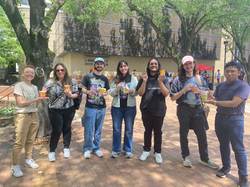
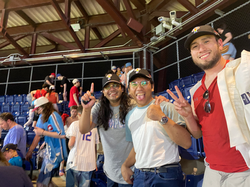
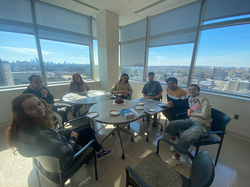
Our team is an invaluable tapestry of experiences and perspectives that fuels groundbreaking scientific discovery. We come from a variety of cultural backgrounds, educational disciplines, and personal journeys. This richness of viewpoints shapes how we see the world, interpret data, generate hypotheses, and innovate new solutions.
 |  |
|---|---|
 |  |
 |  |
 |  |
 |  |
 |  |
 |  |
 |  |
 |  |
 |  |
 |  |
 |  |
 |  |
 |  |
 |  |
 |  |
 |  |
 |  |
 |  |
Anjali Rajadhyaksha
Principal Investigator

Anjali received her Ph.D. in Molecular Biology from Purdue University, where she focused on transcriptional mechanisms, laying the foundation for a long-standing interest in how gene expression shapes cellular function. She broadened this molecular focus during her postdoctoral training in neuroscience at Harvard Medical School, where she began using system-level approaches to study the brain in both health and disease.
Since establishing her lab, first at Weill Cornell Medicine in NYC and now at the Lewis Katz School of Medicine at Temple University, Anjali’s research program has expanded to span molecules, circuits, and behavior. Her team is particularly focused on how molecular signaling pathways shape neural circuit dynamics underlying substance use, neuropsychiatric, and neurodevelopmental disorders. The lab employs a multidisciplinary approach that integrates molecular biology, genetic techniques, in vivo imaging, and behavioral neuroscience to understand how disruptions in transcriptional and signaling processes lead to altered brain function and behavior.
Outside of research, Anjali is passionate about education and mentorship. A firm believer in collaborative science, she finds deep joy in working with trainees and colleagues at all levels. Whether teaching, advising, or leading, she views mentorship as both a privilege and a responsibility.
When she's not in the lab, Anjali enjoys being surrounded by music, whether attending live performances, building playlists with her lab members, or simply playing music in her office.

Arlene Martinez-Rivera
Assistant Professor
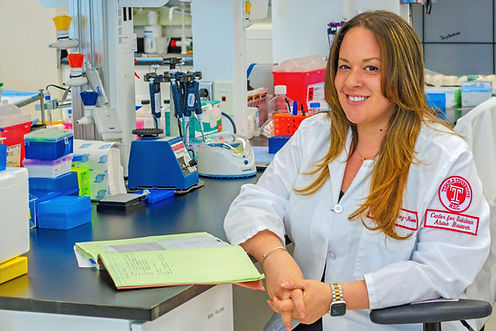
Arlene's primary interest as a neurobiology researcher is to understand the molecular basis of addiction. Early research experiences conducting cocaine self-administration behavioral studies in rats, and molecular work on ion channels in jellyfish, sparked her interest in science, which she deepened through a post-baccalaureate program at the University of Rochester. Arlene completed her PhD in Dr. Carmen Maldonado’s lab at the University of Puerto Rico, where she studied how mGluR5 in the nucleus accumbens regulates cocaine-conditioned behavior in rats. She then joined Dr. Anjali Rajadhyaksha’s lab as a postdoctoral fellow at Weill Cornell Medicine, where she investigated the role of L-type calcium channels in cocaine dependence using animal models. To bridge preclinical and clinical research, she earned a master’s degree in clinical epidemiology and conducted a retrospective study on repurposing LTCC blockers for treating cocaine addiction.
Building on her training in epidemiology, she aims to conduct preclinical addiction research with strong translational potential. While in Dr. Rajadhyaksha’s lab, in collaboration with Dr. Francis S. Lee, she studied how pharmacological manipulation of the endocannabinoid system affects opioid reward and analgesia. Using conditioned place preference, self-administration, and in vivo fiber photometry recordings in mice, they found that MAGL inhibition abolishes morphine and oxycodone reward without disrupting analgesia—effects mediated by CB1 receptors, likely in the VTA. Currently, as an Assistant Professor at CSAR in direct collaboration with Dr Rajadhyaksha, her work focuses on identifying the involved neural circuits and molecular mechanisms, particularly within the RMTg–VTA–NAc pathway, as well as investigating additional effects of MAGL inhibition on opioid responses.
Mohammad Zaki Bin Ibrahim
Post Doctoral Fellow

Zaki’s interest in the Lab involves uncovering the neurocircuitry and underlying molecular mechanisms of the calcium channel Cav1.2 in social behavior, with a focus on the descending projections from the prelimbic cortex. Zaki completed his doctorate at the National University of Singapore, mentored by Dr. Sreedharan Sajikumar and Dr. Soong Tuck Wah.
His doctoral project explored the modulatory effects of CA2 on plasticity and memory consolidation in CA1 within the mouse hippocampus, employing ex vivo electrophysiology and behavioral assays. Prior to NUS, he earned his B.S. in Biological Sciences from Nanyang Technological University where he gained research experience in laboratories across Singapore, Stockholm, and Edinburgh. He remains interested in the dynamics of neural substrates underlying memory and social behavior.
Besides the lab and office, Zaki can often be found in break spaces drinking coffee and eating chocolates. A self-proclaimed daydreamer and Little Monster, he also enjoys listening to orchestral music or watching musicals — though typically not simultaneously.
Andrew Lee
Post Doctoral Fellow

Andrew is interested in studying how TCF20, a transcription factor discovered by Dr. Rajadhyaksha, regulates neural circuit development and behavior using mouse genetics and human-derived organoids. Andrew received his Ph.D. in Neuroscience from Weill Cornell Graduate School of Medical Science of Cornell University, where he studied how excitatory neurons of the cerebellar nuclei regulate circuit development and behavior in Dr. Alex Joyner and a close collaboration with Dr. Rajadhyaksha.
He showed that these neurons regulate cerebellar growth via Purkinje cell survival and SHH-mediated expansion of progenitors — a novel mechanism with implications for scaling across circuits and evolution. He also showed that early loss of the excitatory cerebellar nuclei neurons can be partially mitigated by developmental plasticity, but targeted genetic mutations produce persistent deficits and impaired circuit maturation.
Besides the lab and office, Andrew can often be found running on the Schuylkill river trail training for his next marathon.
Spencer Feehan
Graduate Fellow

Spencer earned a B.S. in Integrative Neuroscience from Binghamton University in New York in 2024. In his undergraduate career, Spencer worked in the lab of Dr. David Jentsch studying the effects of modulating dopaminergic projections on motivational drive in low motivated mice. Additionally, he did work on investigating the sex differences of Parkinson's caused by the loss of PINK1 on anxiety-like behaviors with Dr. Mary Kritzer at Stony Brook University.
Spencer hopes to study the molecular mechanisms underlying the importance of Cav1.2 on cocaine use disorder in the dorsal hippocampus during his PhD with Dr. Rajadhyaksha. Outside of lab, Spencer has a substantial interest in the policy and legislation surrounding drugs of abuse. In his free time, Spencer enjoys making jewelry from old silverware, reading, watching movies, and rock climbing.
Abhik Ghosh
Graduate Fellow

Abhik is researching molecular mechanisms behind CB1 and MOR crosstalk in reward circuitry, focusing on how endocannabinoid modulation can be applied to attenuate opioid reward. He graduated from New York University in 2019, receiving a B.A. with a major in Biology and a minor in History.
After his undergraduate studies, Abhik worked as an analytical chemist in a medical cannabis testing lab in Harrisburg, PA. There, he found a passion for endocannabinoid research and followed it to Temple University, hoping to help uncover the therapeutic potential behind the endocannabinoid system. Outside of the lab, he enjoys watching movies, playing video games, and cooking/trying new foods.
Charlie Maddox
Graduate Fellow

Charlie received a B.A. in Neuroscience and Visual Art from Oberlin College in Ohio in 2022. At Oberlin, they worked in the lab of Dr. Christopher Howard investigating the impact of cannabidiol (CBD) and the contribution of the dorsal striatum to habitual behavior. After graduating, they worked as a postbaccalaureate research fellow in the lab of Dr. Carl Lupica at NIDA, characterizing the activity of the lateral habenula in aversive stimulus appraisal following withdrawal from chronic Δ-9 tetrahydrocannabinol (Δ9-THC).
As a Biomedical Sciences Ph.D. student in the Lewis Katz School of Medicine at Temple University, they hope to study the neurophysiology of pain and reward processing in the context of drug addiction and withdrawal.
Outside of the lab, Charlie enjoys making art, playing TTRPGs, and long walks on the Schuylkill trail.
Sanjana Khandeshi
Laboratory Assistant

Sanjana received a B.S. in Cellular and Molecular Neuroscience and a certificate in American Sign Language was also a member of the Temple University Honors Program. Her research focuses on exploring how L-type calcium channel Cav1.2 signaling in the prelimbic cortex influences social behavior.
Previously, Sanjana studied kappa opioid receptor (KOR) signaling and its role in stress, pain, and diuresis using mouse models. Through these experiences, she has developed a strong interest in how cellular signaling pathways translate into complex behavioral outcomes and how this knowledge can inform treatments for neurological and psychiatric disorders. She plans to pursue a career in medicine, where she hopes to combine her passion for neuroscience research with compassionate patient care.
Outside of the lab, Sanjana enjoys photography, traveling, mystery novels, playing soccer, and watching the fall colors in her hometown with her family and stubborn husky.
Leon Passarelli-Roberts
Laboratory Assistant

Leon (they/he) graduated from Temple University with a BS in Neuroscience: Cellular and Molecular and was a MARC Scholar. During undergrad, Leon spent two years in Dr. Ellen Unterwald's lab studying ketamine's effects on the PI3K/Akt/GSK3b pathway in the mouse. As one of the lab assistants in the Rajadhyaksha Lab, they primarily assist Dr. Arlene Martinez-Rivera's 2-AG project, along with helping to maintain the lab.
Outside the lab, Leon enjoys attending concerts, moshing at music festivals, and movie nights with friends. Their plans for the future include entering a neuroscience PhD, doing research that focuses on molecular mechanisms of mood disorders, like depression and ADHD.
Andre Rei Weeks
Senior Research Manager

Andre graduated from St. Lawrence University in 2012 with a degree in Biology and a minor in Mathematics. He then earned his Master's in Public Health with a concentration in Biostatistics at SUNY Buffalo in 2015. Since then, he has worked in the field of Clinical Research for 12 years, with experience in the sponsor setting, Contract Research Organizations, and academic environments. His goal is to translate the work from the Rajadhyaksha lab into the clinical research space and collaborating with the entire Center for Substance Abuse Research.
Outside of work, he enjoys spending time with his wife and their pets, playing American football and basketball, watching sports and films, grilling, photography, and video production. He also likes hanging out with friends, playing board and video games, and listening to music. Another big thing for Andre is training for races; he has even run 11 marathons despite hating running!
Rachel McCabe
TUSM: School Of Medicine

Rachel graduated from Washington University in St. Louis in 2024, earning a B.A. in Biology and Spanish. As an undergraduate researcher in the lab of Drs. Joan Strassmann and David Queller, she investigated the evolutionary dynamics and predatory interactions between the social amoeba species Dictyostelium discoideum and various bacterial strains.
Driven by a passion for translationally focused healthcare, she transitioned into clinical research, where she now works on a comprehensive retrospective study evaluating patient outcomes associated with Calcium Channel blocker therapies across the Temple Health network.
Outside of her clinical research responsibilities, she spends time with her friends, family, and her beloved cat, Maisie. She is an avid runner who can frequently be spotted logging miles along the Schuylkill River Trail, and she loves taking on new culinary challenges by testing out fresh recipes in her kitchen. To unwind, she enjoys discovering new books, catching up on reading, and exploring the outdoors around Philadelphia.
Madeline Usonis
CLA:Psychology & Neuroscience

Madeline earned her B.S. in Molecular Biology with minors in Chemistry and Psychology from the University of Denver in June 2026. As an undergrad, she worked under Dr. Daniel Paredes studying the molecular mechanisms underlying Alzheimer's Disease and Traumatic Brain Injury. Born and raised in the Philadelphia area, Madeline came home to pursue her M.S. In Neuroscience, following her passion for Addiction Science & Medicine.
In the lab, she aims to conduct research that explores endocannabinoid system interventions as means of opioid reward modulation, hoping that the translational impact of such preclinical research can lead to the development of better Substance Use Disorder medicine. She also continues this passion outside of the lab, spending much of her free time working in in-patient addiction rehabilitation, supporting local harm reduction organizations, and tutoring inmates at the state correctional institution.
Outside of her work, Madeline loves to cook, bake, sew, embroider, write, and bead! She relaxes at the end of the day with her guitar and her three-legged cat, Sling. A fun fact about her is that she does not own a smartphone and loves to spend her time burning CDs and sending out snail-mail instead!"

Sahasra Lakshmi Earla
CST: Neuroscience
Saha is pursuing a B.S. in Cellular and Molecular Neuroscience with interests in neurobiology and behavior, particularly neurological disorders such as epilepsy and Parkinson’s disease and their effects on cognition, behavior, and memory. She is also interested in calcium channel function and how disruptions in neural signaling contribute to neurological disease.
In the lab, she contributes to research investigating the neurobiological mechanisms underlying substance use disorders, particularly how opioid use alters brain reward circuitry. Her work focuses on the role of 2-arachidonoylglycerol (2-AG) in specific neural circuits involved in opioid reward within the brain’s endocannabinoid system. Through techniques such as immunohistochemistry, she continues to build experience in histological research.
Outside of the lab, she enjoys staying active through dance, discovering new music, watching sports, and taking walks or drives to explore new places.


Westley Le
CLA: Psychology & Neuroscience
Westley is double majoring in Cellular and Molecular Neuroscience and Psychology, with a minor in Philosophy, and is a member of the Honors program.
In the lab, he investigates the relationship between L-type calcium channel knockouts in the prelimbic cortex and social deficits in mice. His external research examines social isolation in individuals with serious mental illness, focusing specifically on the themes of marginalization and mattering. This dual focus—bridging the social and clinical intersections of psychology and neuroscience—has provided him with a holistic perspective on mental health. Westley plans to pursue a PhD in Clinical Psychology, where he intends to integrate high-level research with direct patient care.
Outside of his studies, Westley is a competitive Overwatch player for Temple University’s Esports team. He also enjoys photography, baking, discussing philosophy, and playing the cello.

Kishore Madhav
CST:Biology
Kishore is majoring in Biology with a minor in Public Health and a certificate in Genomic Medicine. He is a member of the Honors program.
He has a strong interest in the signaling pathways of the brain and body, and how that relates to behavior and clinical treatment. This ties into his future aspirations of becoming a physician and helping patients in a clinical setting. In the lab, he assists with substance abuse research, focusing on the effects of 2-arachidonoylglycerol (2-AG) on mu opioid receptors and cannabinoid receptor 1.
Beyond the lab, Kishore spends his time watching UFC/NBA, working out, and spending time with family. He is also part of various clubs across Temple campus.

Anika Rastogi
CST:Biology
Anika is majoring in Biology with a minor in Healthcare Management and is a member of the Temple University Honors Program. She has a strong interest in understanding the biological mechanisms underlying behavior and disease, particularly how molecular signaling pathways in the brain can influence substance use and addiction. This ties to her future goals of becoming a physician and applying scientific knowledge to improve patient care and treatment.
In the lab, Anika assists with ongoing projects investigating the molecular mechanisms underlying substance use and addiction. She is particularly interested in understanding the role of endocannabinoid and opioid signaling pathways in reward-related behaviors and how interactions between these systems may influence substance use. Through her work in the lab, she hopes to contribute to research exploring potential therapeutic targets for addiction and gain experience in translating basic molecular findings into improved approaches for patient treatment.
Outside the lab, Anika is part of the Temple Club Swim Team and AMSA. She also likes to attend dance workshops in the city and try new restaurants!

Eduardo Zamora-Ramirez
CLA:Neuroscience
Eduardo is a senior at pursuing a B.S in Neuroscience. Through a Temple University undergraduate research program, they joined Dr. Rajadhyaksha’s lab as an undergraduate research assistant. Their academic interests center on behavioral neuroscience and neural circuits underlying social interactions.
In the lab, Eduardo supports ongoing projects by assisting with genotyping for research staff and performing manual behavioral scoring in mouse models. Their work focuses on assessing patterns of social and exploratory behavioral – such as how mice interact with one another, respond to novel objects, or show reduced engagement. In this role, they are gaining hands-on experience with behavioral assays, molecular techniques, and the day-to-day operations of a neuroscience research lab.
Eduardo enjoys spending time with friends in Chinatown, playing Marvel Rivals when time allows, and cooking – specially making homemade flan.
Undergraduates
Lab Alumni
-
Anjali Barot (2025 - 2026) - Pharmacy student, Long Island University
-
Josiah Walsh, Lab Assistant (2024 - 2026) - PhD student, University of Maryland, Baltimore (UMB)
-
Patricia Fernandez Palleiro, Post Doctoral Fellow (2024 - 2026)
-
Ahmad A. Altarifi, Visiting Research Scientist (2024 - 2025) - Associate Professor, Drexel University
-
Lily Waxler, Undergraduate researcher (2024 - 2025)
-
Hami Lee, Postdoctoral fellow (2024 - 2025) - Postdoctoral fellow, University of Luxembourg
-
Kimesha Morrison, Post-bac researcher (2023 - 2024) - Research technician, Temple University
-
Diego Chavez Scala, Post-bac researcher (2022 - 2023) - Research associate, New York University
-
Nardos Kebede, Post-bac researcher (2021 - 2022) - PhD student, Emory University
-
Narmin Mekawy, Post-bac researcher (2020 - 2022) - PhD student, Stony Brook
-
Madelyn Baker, PhD student (2019 - 2025)
-
Alexander Walsh, Post-bac researcher (2018 - 2020) - PhD student, Weill Cornell
-
Andrew Lee, PhD student (2017 - 2024) - Postdoctoral fellow, Whitehead Institute for Biomedical Research
-
Jonathan Hackett, Post-bac researcher (2017 - 2018) - Senior manager, Data science solutions, USA for UNHCR
-
Delaney Fischer, Post-bac researcher (2015 - 2017) - Senior manager (Competitive intelligence), 4D Molecular Therapeutics
-
Charlotte Bavley, PhD student (2014 - 2019)
-
Caitlin Burgdorf, PhD student (2014 - 2019)
-
Zeeba Kabir, Postdoctoral fellow (2014 - 2016) - Scientific director, SIMPSON Healthcare
-
Baila Hall, PhD student (2013 - 2019)
-
Richard Rice (2013 - 2015) - Resident, Orthopedic surgery, Loma Linda University
-
Concetta Dipace, Postdoctoral fellow (2013 - 2014) - Associate director, Oxford Nanopore Technologies
-
Maureen Byrne, Post-bac researcher (2011 - 2013) - Fellow, Oncology, Weill Cornell Medicine/Memorial Sloan Klettering
-
Anni Lee, PhD student (2010- 2014)
-
Stephen Ra, Post-bac researcher (2009 - 2011) - Director of Frontier Research, Prescient Design, Genentech
-
Karthryn Schierberl, PhD student (2008 - 2013)
-
Jin Hao, Post-bac researcher (2008 - 2010) - Principal scientist, Novartis
-
Thomas Tropea, Post-bac researcher (2004 - 2007) - Associate Professor, University of Pennsylvania
-
Thomas Giordano, Post-bac researcher (2004 - 2006) - Senior Lab Manager, HilleVax
-
Shirish Satpute, Post-bac researcher (2000 - 2002) - Neurologist, Epilepsy, Houston